
The product is great. The growth isn't.
You built a great product. The market isn't moving. The team is busy. Nothing's compounding.
If that pattern feels familiar, you're not having a marketing problem, a sales problem, or a product problem. You're having a GTM problem. And it deserves more attention than most companies give it.
GTM is one of the most overused, least defined terms in business. It shows up in pitch decks, board meetings, hiring briefs, and quarterly reviews. Almost no one uses it the same way. Some people mean marketing. Some mean sales. Some mean a launch plan, a campaign, or a function with no clear owner. Most use it as a label, then move on.
So let's start with what it actually means.
What GTM actually means
Go-to-Market is everything you do to get a product to a customer, and to keep them there.
It covers six things, all of them connected. How you position the product, so the right people understand why it's for them. Pricing, so the value is clear and the unit economics work. Distribution, the question of how the product reaches the people who need it. Sales, in whatever shape that takes for your model. Marketing, so the right buyers find you when they're ready. And retention, so the work of acquiring a customer keeps paying off long after the deal closes.
It is not just marketing. It is not just sales. It is not a launch event, a campaign, or a function that lives in one team's roadmap. It is the system that connects the company to the market, and keeps that connection alive.
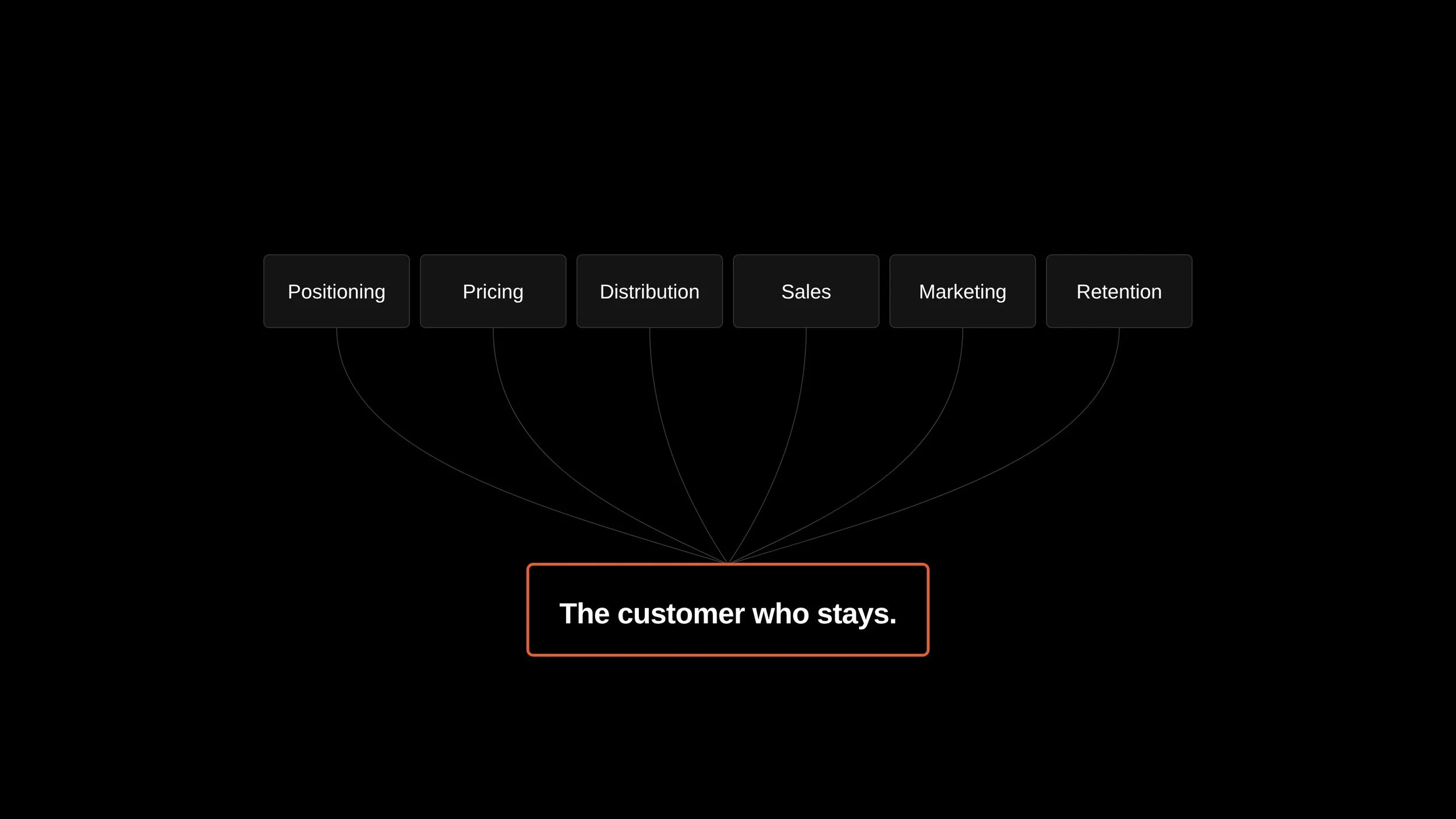
That system carries more weight than most companies acknowledge. Once you see GTM as the thing that turns a product into a business and keeps customers from leaving, its place in the company becomes obvious. It informs how the product gets built. It shapes how revenue is forecast. It influences who you hire, when, and what you measure them on. Treated as decoration, it leaves every other function carrying weight that isn't theirs to carry. Treated as a system, it stops costing the company the things that are hardest to replace: time, focus, and customer trust.
GTM isn't a function that lives in one team. It runs across all of them.
Where most companies miss it
The mistake usually starts before the GTM does.
The first pattern: treating marketing as packaging. The team builds the product, lines up the launch, and assumes the market will respond. Distribution becomes a "we'll figure it out" item. Positioning is whatever the CEO said in the last pitch. The product gets shipped to silence, and the response is to add more features.
The second pattern: confusing tactics with strategy. Running campaigns, posting content, sending emails, attending events. All of it busy, none of it pointed at a thesis. There's no answer to who the buyer is, what winning looks like, why this company over another, why now. Activity replaces clarity.
The third pattern:hiring narrow specialists too early. A performance marketer here, a content writer there, an SEO lead, a community manager. Three or four specialists running in parallel, each optimising their lane, none of them orchestrated. The company ends up with fragmented metrics and no system underneath.
The fourth pattern: treating GTM as a launch event. The launch is the start, not the finish. Most companies stop investing in GTM exactly when the work begins. Initial traction is mistaken for product-market fit, and the team moves on to building features instead of building the engine that distributes them.
The fifth pattern: underestimating retention. Acquisition is loud and easy to celebrate. Retention is quiet and hard to measure in week one. The companies that compound are obsessed with both. The companies that plateau are obsessed with new logos.
None of these mistakes are about effort. They're about how the system is set up.
What good GTM looks like
Good GTM is a system, not a slogan.
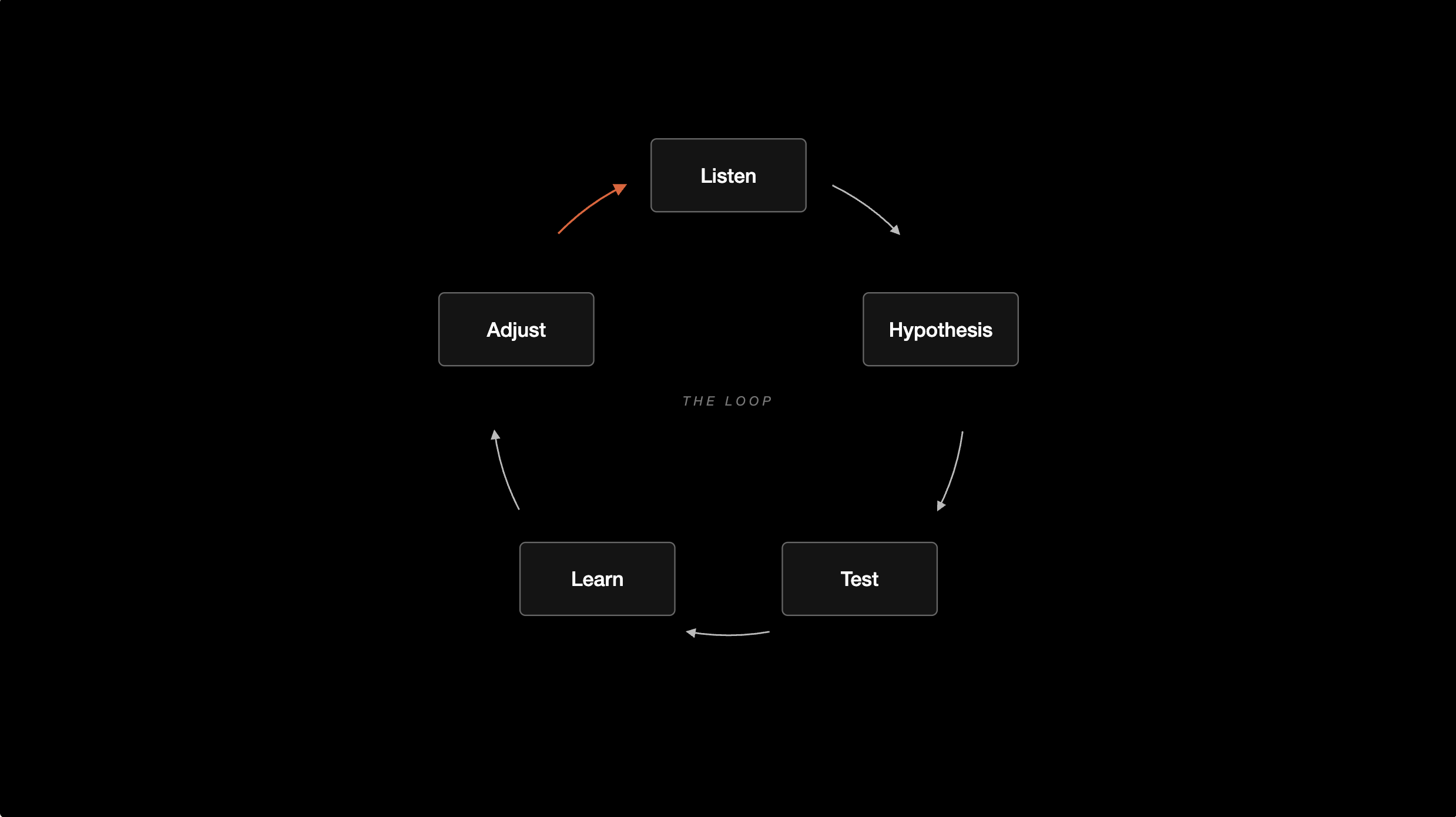
It works as a continuous loop. Listen to the market, form a hypothesis, test, learn, adjust, repeat. The team treats every quarter as a chance to learn something new about the buyer, not as a checkbox against last year's plan.
It feeds the product. The customer voice loops back into what gets built next. The product roadmap is shaped by signal from the market, not by what's loudest in the engineering meeting. This is the difference between a company that finds product-market fit and a company that drifts past it.
It balances tactics with strategy. Every campaign, channel, and experiment serves a thesis. Tactics in service of a thesis is GTM. Tactics without a thesis is activity.
It is run by someone with judgment and taste, not just dashboards. Knowing what to chase and what to ignore is the actual job. AI tools can run the operational tier. Choosing what the operational tier should be working on is still a human call.
It measures the things that matter. PMF signals, retention curves, expansion revenue, contribution margin, payback period. Not impressions. Not follower counts.
It adapts to where the company actually is. The GTM for a company at 1M in ARR is not the GTM for a company at 100M. The instincts that worked when the company was small can become the bottleneck once it scales. Good GTM is honest about that.
This is the bar Two Plus holds. It is the bar we'd argue every company should hold, regardless of stage, geography, or sector.
What's shifting
GTM today doesn't look like GTM five years ago.
AI is absorbing the operational layer. Campaign building, content drafting, lead scoring, first-line support, even early-stage market research. The execution tier is collapsing into agents and tools that ship work in hours instead of weeks.
The teams winning right now are leaner because of it. ARR per employee is rising across AI-native companies. The 30-person GTM org of 2021 is being replaced by smaller, sharper teams supported by an AI stack that handles what used to be a full-time job.
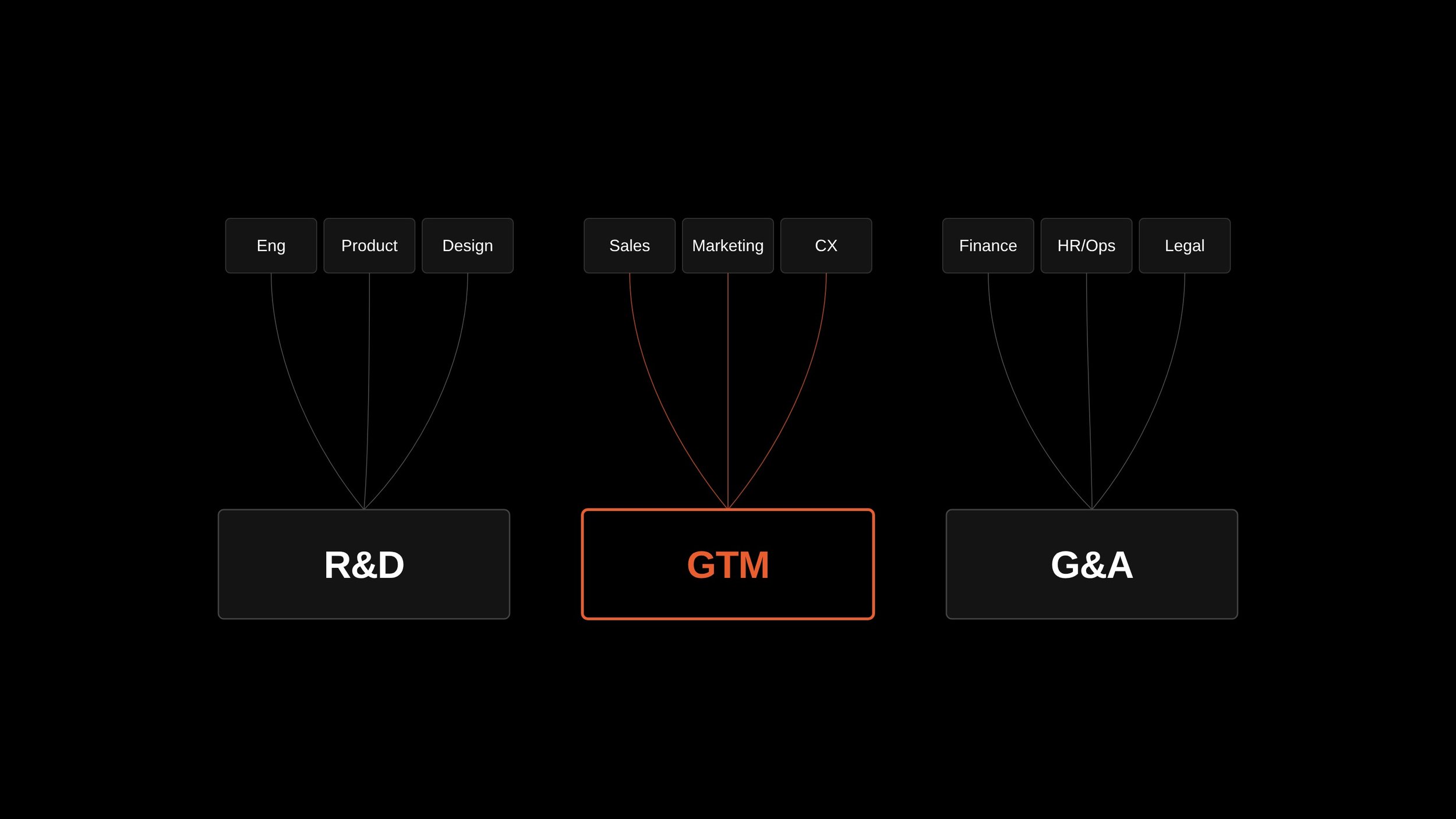
The role of the GTM lead is shifting too. From channel ownership to orchestration. From running the campaign to directing the people and agents who run it. The work is moving up the stack: less doing, more deciding.
This isn't replacing the function. It is compressing it. The fundamentals still hold. The way they get delivered is changing.
Future posts will go deeper on this. For now, the point is simpler. The shape is changing. The principle is not.
The bottom line
GTM is not a department. It is the system that turns a product into a company.
The team that gets it right outpaces the team that gets it wrong, regardless of who has the better technology, the bigger budget, or the louder launch.
The principle is older than any of the tools. The execution is changing fast. The companies that get this combination right, treating GTM as the strategic spine and using AI to compress the operational layer, will own the next decade.
The product gets you noticed. The GTM is what keeps you alive.
